
Practice with feedback
Play along — your computer listens
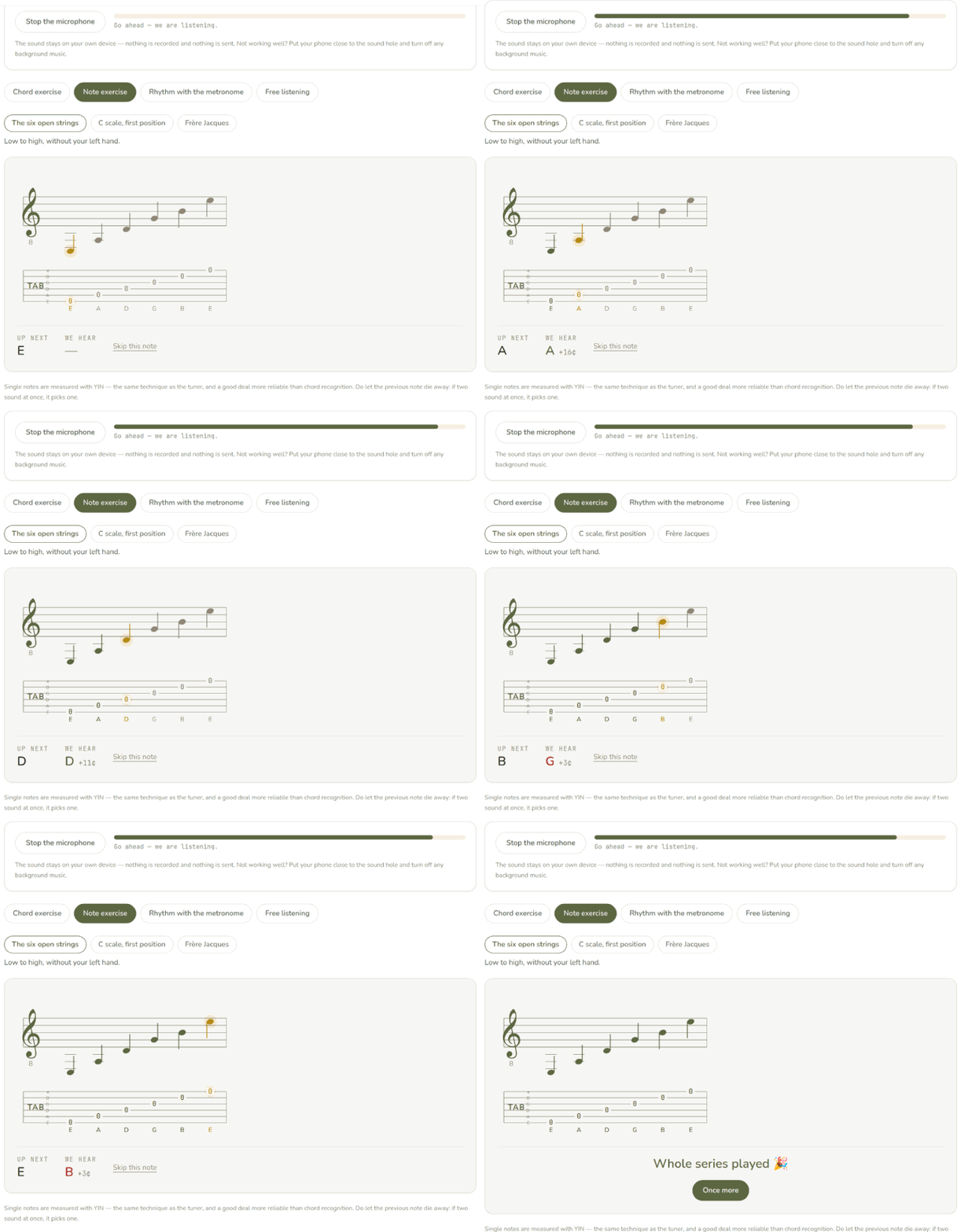
Switch on your microphone and play. We listen along and tell you whether the chord is right — including which string is not ringing, exactly where nearly everyone gets stuck. There is also a stave you walk through note by note, and a rhythm exercise where you play along with the metronome.
Everything happens on your own device: no audio goes to a server, and nothing is recorded.
Your microphone is off.
The sound stays on your own device — nothing is recorded and nothing is sent. Not working well? Put your phone close to the sound hole and turn off any background music.
The five that almost every song starts with.
Play now (1/5)
Em
Switch on the microphone and we will listen to whether you are fretting this chord properly.
5 of the 26 exercises are free — at least the first of each kind. The other 21 are part of Guitar lessons and All-in-one. In total 6 chord series, 12 note series and 4 rhythms.
Play bass guitar? Switch instrument at the top: you'll find 7 note series and 5 rhythms, in bass clef with four tab lines. The complete beginner-to-amateur path lives on learning bass guitar.
The other two modes
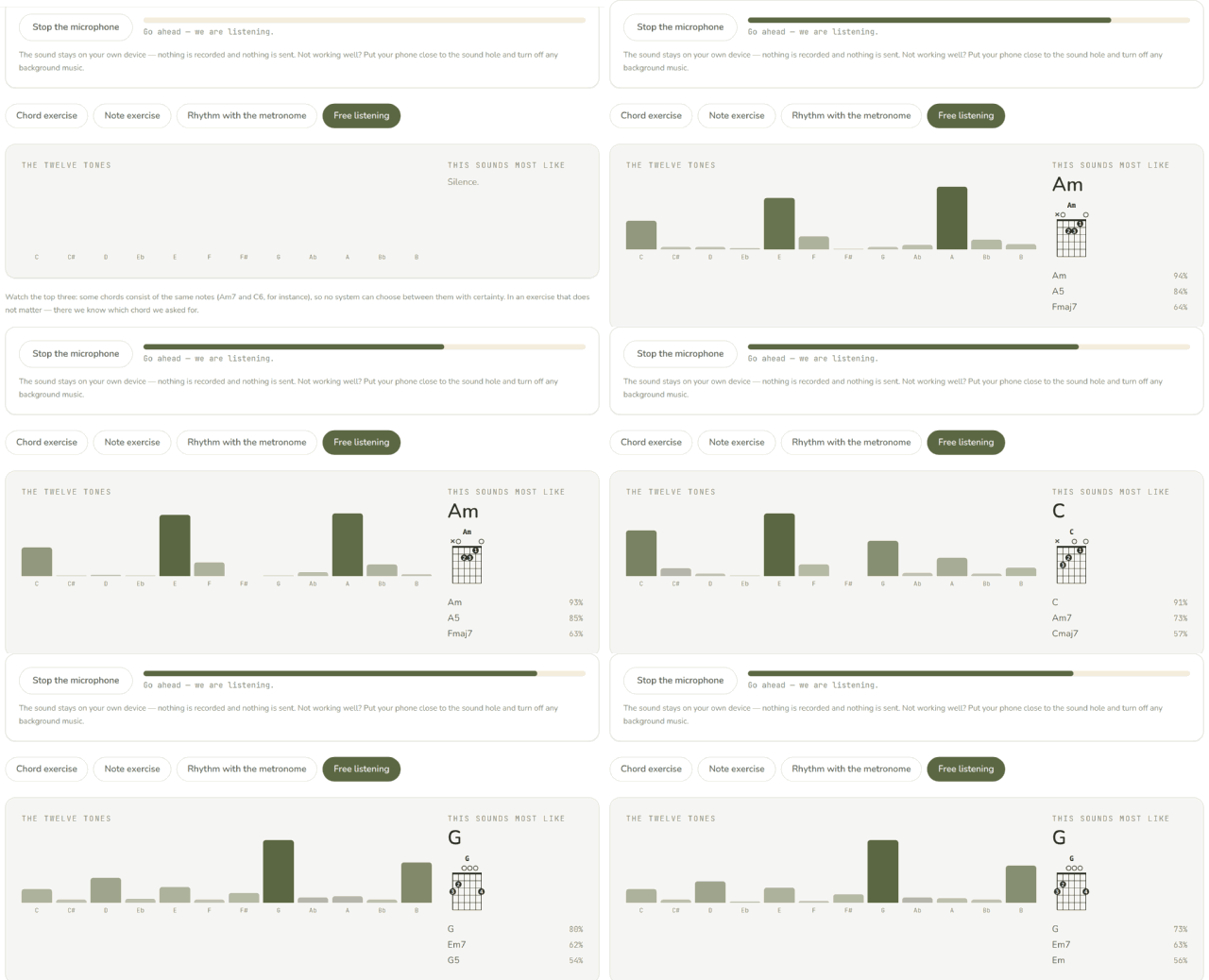
The exercise itself is above — these two only appear once you switch tabs, so here is a preview. They are recordings of this very page, not mock-ups.
How to get the most out of this
- Tune first. An out-of-tune guitar makes the recognition miss, and then it looks as if you are the one getting it wrong. Tune your guitar →
- Play in a quiet room. Noise barely matters, but a TV or a second instrument does — those are notes that do not belong.
- Treat it as a helper, not a judge. It looks at pitch, not at tone. An ugly but in-tune chord passes.
Curious about the technique behind it, or want to try everything without a subscription? That is possible in the labs version.