
For beginners
Learn to play guitar, from your first chord to your first song
Dream of playing by the campfire or your favorite song all by yourself? Even if you can't play a note yet, you can learn. In this guide, we'll go step by step — relaxed and at your own pace.
- 65.000+
- members since 1998
- 4,7
- · 600+ reviews
- 9
- lesson levels with certificate
Get started right away
What do you need to get started?
Four things, nothing more. You'll learn the rest along the way.
A well-tuned guitar
Acoustic or electric — as long as it's perfectly in tune. Nothing is more tedious than practicing on an out-of-tune guitar.
A teacher
A structured method like Gitaartabs or our book, so you learn in the right order and don't get stuck.
Motivation
Think about why you want to play — for a campfire, your children, or simply for yourself. That keeps you going.
Consistency
Fifteen minutes every day beats one long session a week. A regular schedule builds muscle memory.
Which guitar do you choose?
Already have a guitar? Then you can get started right away. Don't have one yet? These are the common types for beginners.
Classical / Spanish
Nylon strings, gentle on your fingertips. Most beginners start here — comfortable and affordable.
Western (steel)
Steel strings, fuller and louder. Requires a slightly firmer press, but the signature sound for pop and folk.
Dreadnought
Large western body with plenty of volume and bass. Popular for accompaniment and group singing.
Semi-acoustic
Acoustic and amplifiable. If you want to play through an amp later, this guitar grows with you.
Want to know more about the parts of your guitar and what to look for when buying? That's covered in detail in the guitar learning path and on our books.
The parts of your guitar
Know your instrument. These are the main parts — handy when you follow explanations, chords or tabs.
Headstock
The end of the neck that holds the tuning pegs.
Tuning pegs
Turn these to tune each string higher or lower.
Neck & fretboard
The long part where your left hand presses down the strings.
Frets
The metal strips across the neck; you press between two frets — each fret is one semitone.
Body & sound hole
The body amplifies the sound; on an acoustic it resonates through the sound hole.
Bridge & strings
The bridge anchors the strings to the body. Six strings, from thick (low E) to thin (high e).
Tip: with a capo — a clamp on the neck — you play in a higher key using the same chord shapes.
How do you tune your guitar?
Nothing is more annoying than an out-of-tune guitar. Most songs use standard tuning, from thick to thin string:
E · A · D · G · B · e
- Clip-on tuner on the headstock — easiest for beginners.
- A tuning app on your phone (such as ProTabs — Guitar).
- By ear, using a reference tone — you'll develop that skill later.
Het snelst gaat het met een gratis online tuner — stem via je microfoon, zo in je browser.
Standard tuning
thick (low) → thin (high)

The right posture
Good posture prevents pain in your neck, arms and back — and makes your chords sound cleaner.
Classical posture
The guitar rests on your left leg, close to your knee. Your right arm rests on the top of the body. Keep your back straight and shoulders relaxed.
Casual posture
The guitar rests on your right leg. Does that feel better? Fine — as long as your back stays straight and your wrist stays relaxed.
Your first chords
There are 7 root notes (C, D, E, F, G, A, B). Start with these four open chords — enough to play your first songs.
Want to go further? Check out the complete chord guide or the library with 150+ chords.
Only at Gitaartabs
Play along — your computer listens
The player is what you play along with. But is what you play correct? Switch on your microphone and play a chord: we hear whether it is right, and which string is not ringing — exactly where nearly every beginner gets stuck. Works for single notes too. Everything happens on your own device; nothing is recorded.
Try it for free →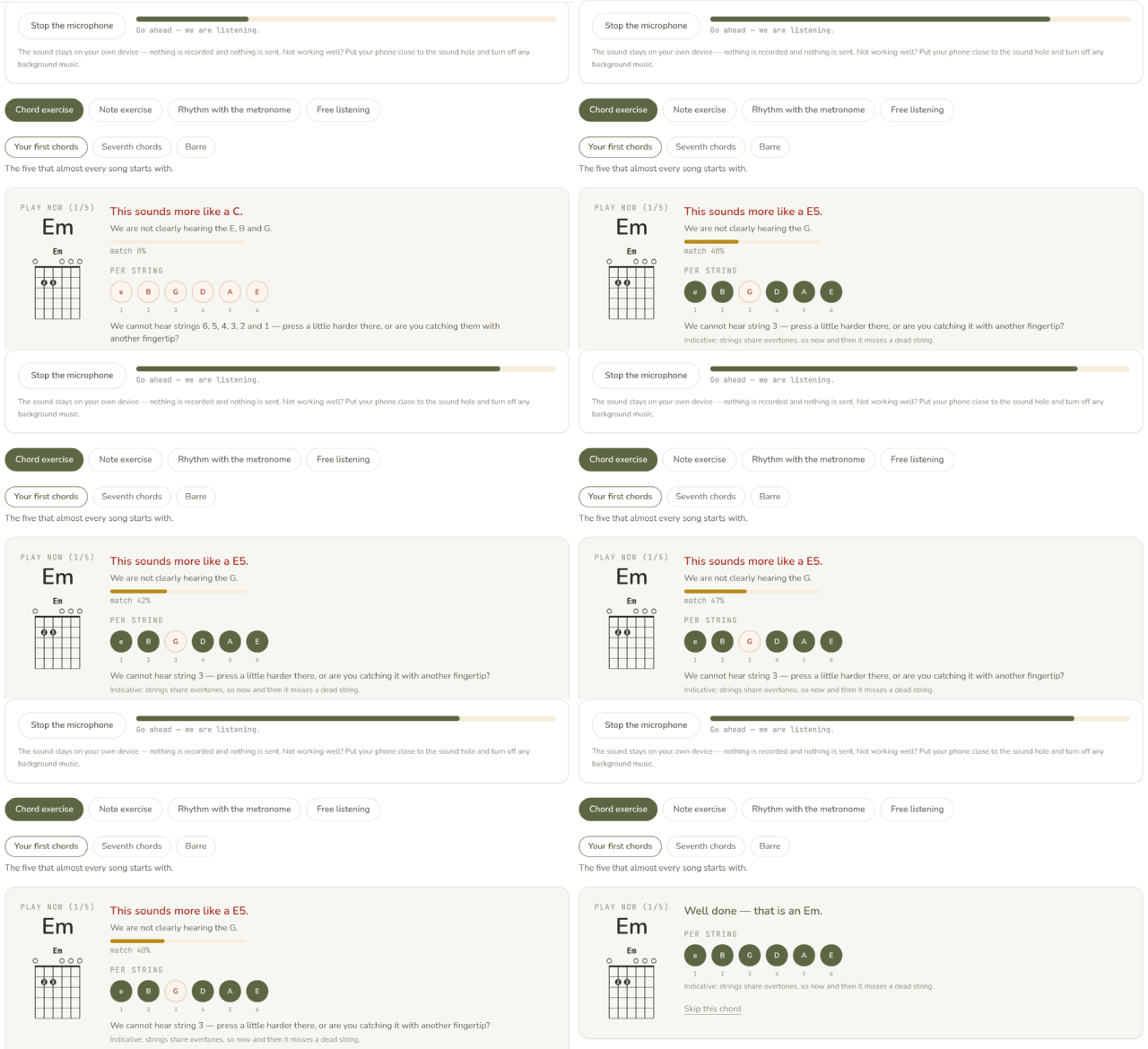
Switch chords smoothly
It's not the chords themselves, but the switch between them that makes the difference. By practicing, you build muscle memory — these three are notorious.
Notorious: keep no fingers down. Visualize the G while you're playing C, lift all your fingers together, and place them down at once. Slowly, until your hand knows the way.
These look similar to each other. Keep your middle and ring fingers in the same shape and slide them down one string; add your index finger on the B string, 1st fret. The transition happens almost automatically.
Use the anchor-finger principle: keep your ring finger on the B string (3rd fret) and move only your index and middle finger. This way you don't have to reposition every finger.
Pro-tip: set a timer for one minute and count how many times you can switch back and forth flawlessly. Try to improve that number every day.
Reading guitar tabs
Reading tabs isn't difficult. Each line is a string: the top line is the highest (thinnest) string, the bottom one is the lowest (thickest).
- You read from left to right, just like text.
- A number indicates the fret where you press that string.
- A 0 means: play the string open, without pressing.
- Numbers directly above each other are played simultaneously — that's a chord.
e|--0---------------|
B|--1---------------|
G|--0---------------|
D|--2---------------|
A|--3---------------|
E|--x---------------|
   ↑ this is a C chord
Strumming
There are multiple ways to play the strings: downstroke, upstroke, with your thumb, or with a pick. For beginners, a medium pick works best — it delivers a consistent stroke and spares your fingertips.
Watch your left hand:
- Place your fingers upright (perpendicular) on the neck.
- Place them as close as possible behind the fret.
- Keep space between your palm and the neck.
- Your thumb sits behind and in the middle of the neck.
Music & rhythm
Music consists of melody, harmony (chords), and rhythm. Move your right hand up and down with the beat — without touching the strings: 1 down-up, 2 down-up, 3 down-up, 4 down-up. First play only the 'downs,' then experiment with down and up on counts 1 and 3. This way you'll naturally build a solid strumming pattern.
Only at Gitaartabs
Play along with the metronome and see how tight you are
Don't just count along — measure it. The microphone hears every strum and shows how evenly you play, beat by beat. No grade to feel bad about, just whether it is getting tighter.
Try it for free →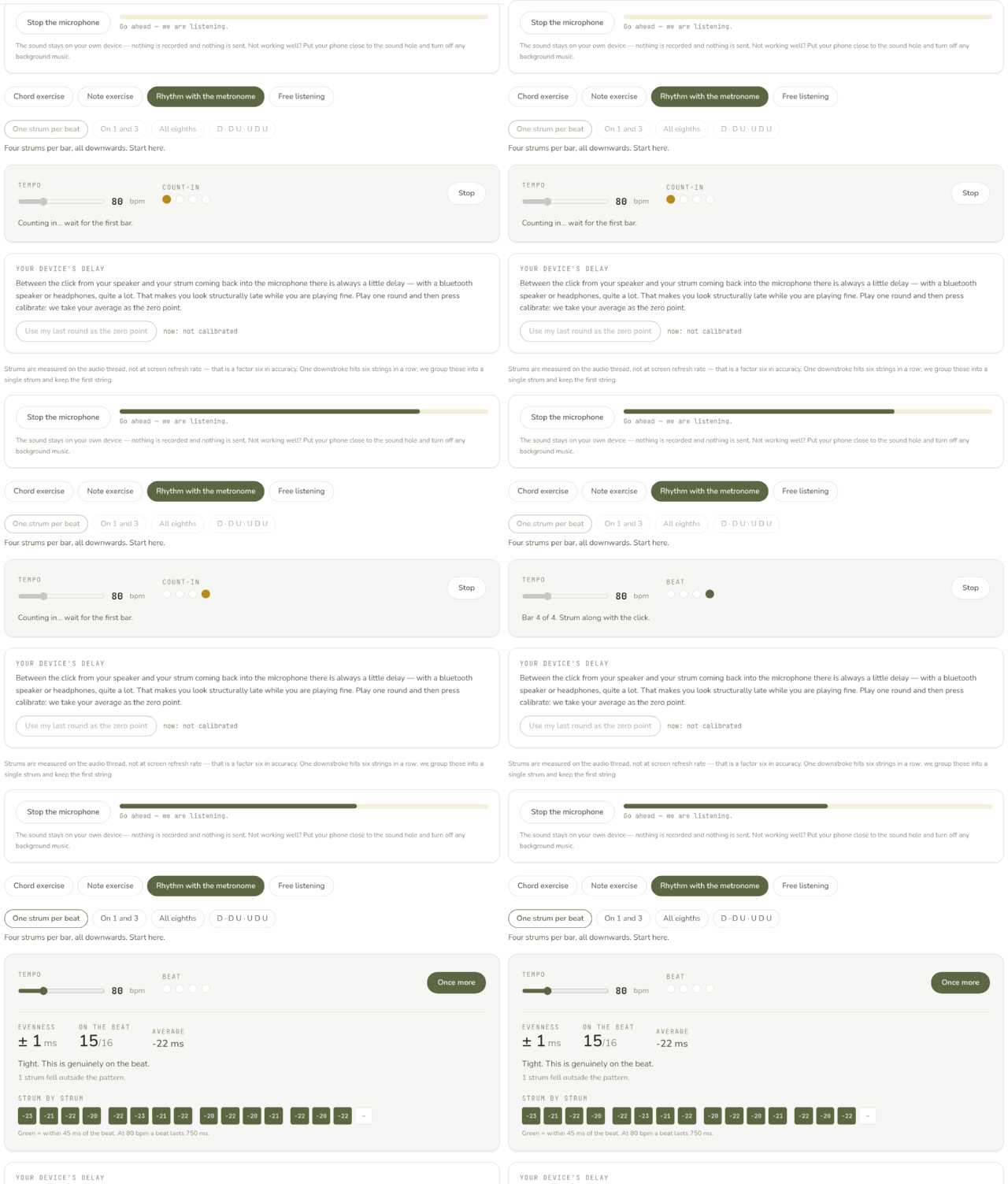
Apply immediately
Your first songs
Once you know a few chords, you'll already be playing recognizable songs. These classics use only basic chords.
Easy songs from our library
All easy songs





Play along
From your first chord to your favourite song — step by step.
How quickly can you learn to play guitar?
3 maanden
until noticeable progress
With regular practice, you'll know the basic chords, play simple songs, and switch comfortably between them — often within three months.
15–30 min
per day is enough
Short, daily sessions deliver more results than one long session per week. Consistency builds muscle memory and confidence.
Toegankelijk
compared to other instruments
Guitar is a rewarding starter instrument: you produce a beautiful sound faster than on, say, violin. Enjoyment sets your pace.
Common beginner mistakes
Avoid these and you'll build a strong foundation — and stay motivated.
Going too fast
Tip: Learn chords well before attempting songs. Practice slowly and build tempo with a metronome.
Not tuning before playing
Tip: Tune your guitar before every session with a clip-on tuner or app. Otherwise, you'll develop poor ear training.
Practicing inconsistently
Tip: Short, daily sessions (10–15 minutes) are far more effective than one long session per week.
Trying to learn too much at once
Tip: Focus first on basic chords and simple rhythms. Don't tackle tabs, barre chords, theory, and strumming patterns all at once.
Incorrect posture or hand position
Tip: Straight back, relaxed shoulders, correct wrist angle. Use a mirror or ask for feedback.
Not using a pick
Tip: Start with a medium pick for a consistent stroke; experiment with other styles later.
Keep it fun above all
- Choose songs you genuinely enjoy — that way practicing stays fun.
- Start simple so you experience quick results and build confidence.
- Set small, achievable goals and don't get stuck on what frustrates you.
- Practice regularly and briefly; celebrate every small progress.
Frequently asked questions
How quickly can you learn to play guitar?+
With 15 to 30 minutes of daily practice, you typically notice clear progress within three months: you'll know the basic chords, play simple songs, and switch between chords comfortably.
How many hours per day should I practice?+
As a beginner, just 15 minutes a day is enough to make progress. Consistency matters more than long sessions — repeat lessons until you truly master them.
How difficult is it to learn guitar?+
Guitar is a relatively accessible instrument: you get a nice sound from it faster than, say, a violin. How quickly you progress varies per person — natural aptitude and sense of rhythm matter, but anyone can learn it.
Which guitar do I need as a beginner?+
Most beginners start with a classical (Spanish) guitar with nylon strings: gentle on your fingers and affordable. If you want more volume or to play electric later, a (semi-)acoustic western is a good choice.
Do I need to learn to read sheet music?+
No. You learn guitar with chord diagrams and tabs, without sheet music. A diagram shows exactly where to place your fingers.
Which chords should I start with?+
Start with A, D, Em, and G. These are open chords with a full sound and few fingers needed — enough to play your first songs.
Pick up your guitar and start today
Play along immediately and play your first song in just a few minutes. 500+ online lessons, chords, and play-along ProTabs.

Professionele videoles
Rather learn with a teacher?
In our video lessons a real teacher guides you step by step — from your first chords to your first song. Watch along, play along, at your own pace.
Module 1 voor beginners zit in de abonnementen Gitaarles en Alles-in-één. Probeer een maand voor € 1.